Gensler’s 2025 study: what do employees expect from the workplace?

After the pandemic, bringing employees back to the office has become one of the most pressing questions. The only organisations truly succeeding today are those willing to listen to how employees actually want to work – and what they need to do that. Not in the past or “how it has always been done”, but here and now.
Much of the groundwork has already been done by the research institute Gensler, which surveyed thousands of employees around the world to find out how working life has changed after the pandemic. This article provides an overview of the key findings and offers ideas on how to turn those insights into real, tangible improvements in the workplace.
Noise is still the main concern
Gensler’s study showed that, although satisfaction with the work environment has been steadily increasing since the pandemic, the problems that were highlighted long ago have largely remained the same. Employers are on the right track, yet there is still no such thing as a problem-free office. The most frequently mentioned issue remains disturbing noise. Noise is not a problem for only 11% of employees – a shockingly small number.
What kind of noise do employees complain about?
– 45% are disturbed by colleagues talking on the phone.
– 41% are disturbed by colleagues’ in-person conversations.
– 28% are disturbed by foot traffic.
– 24% are disturbed by noise coming from meeting rooms or collaboration areas.
Fortunately, these problems can be solved. By keeping quiet work areas physically separate from zones for socialisation and teamwork, everyone can find a place that supports the task at hand. In smaller offices, phone booths can already make a noticeable difference. Furniture that improves room acoustics also helps. See more examples of such solutions towards the end of this article.
Problem no. 2: lack of space
The proportion of employees who can choose where they carry out different tasks has been growing rapidly – whereas ten years ago most felt they had no choice at all. But can that choice be made based purely on personal preference? Unfortunately not.
– Only 18% base their choice of workplace on aesthetics (suitable lighting, a pleasant view, etc.).
– 31% choose according to how well the layout supports the nature of their work.
– 32% are guided by visual, and 34% by acoustic privacy.
– As many as 44% simply choose whichever spot happens to be free…
Areas intended to support productivity are of limited benefit when there are so few that they are difficult to access. This is why availability needs to be thought through carefully. Because preferences differ across sectors, it is worth finding out which types of work settings employees themselves would like to see more of. Diversity always helps – the more varied the work environments, the better.
Find solutions with Intuit
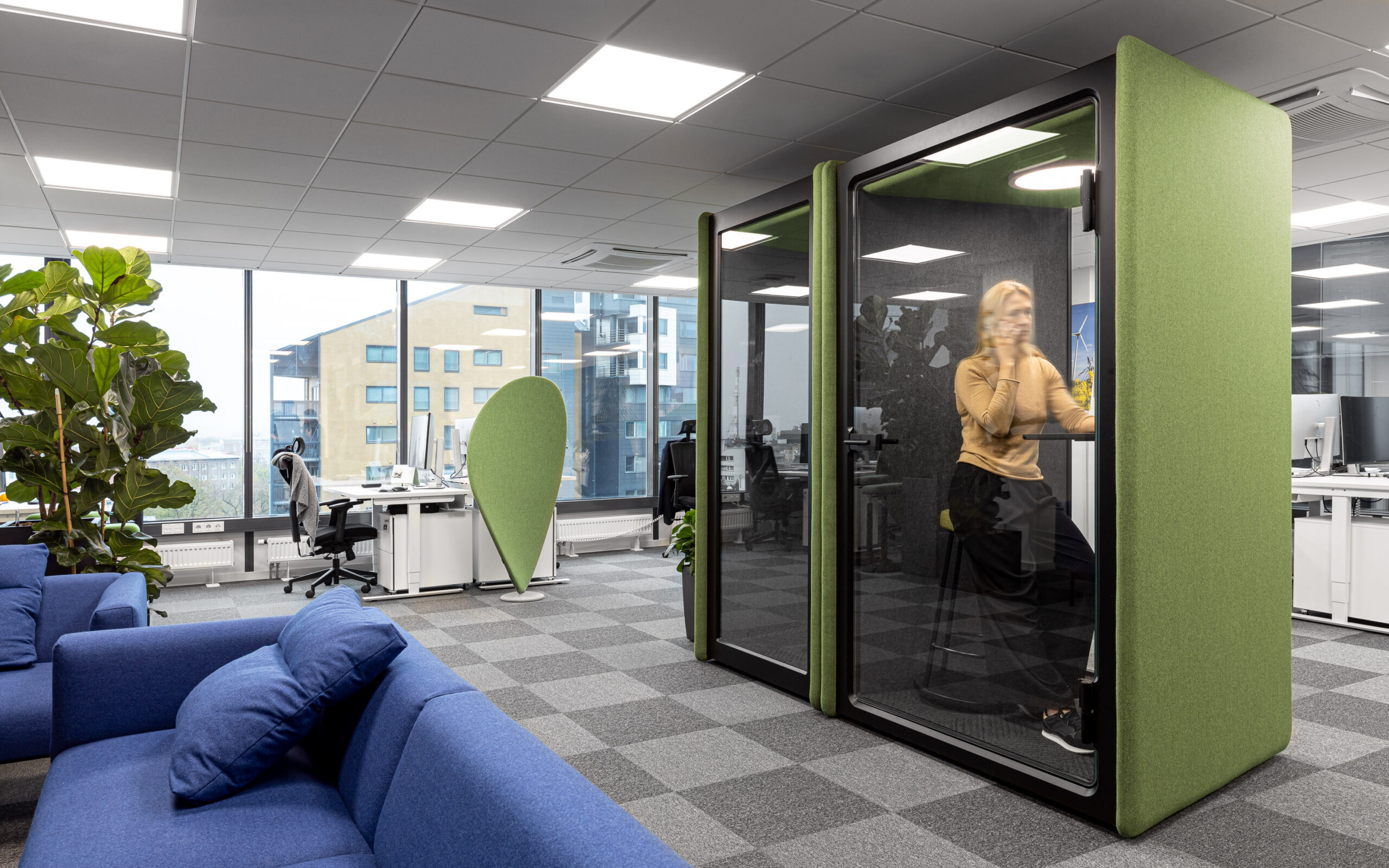
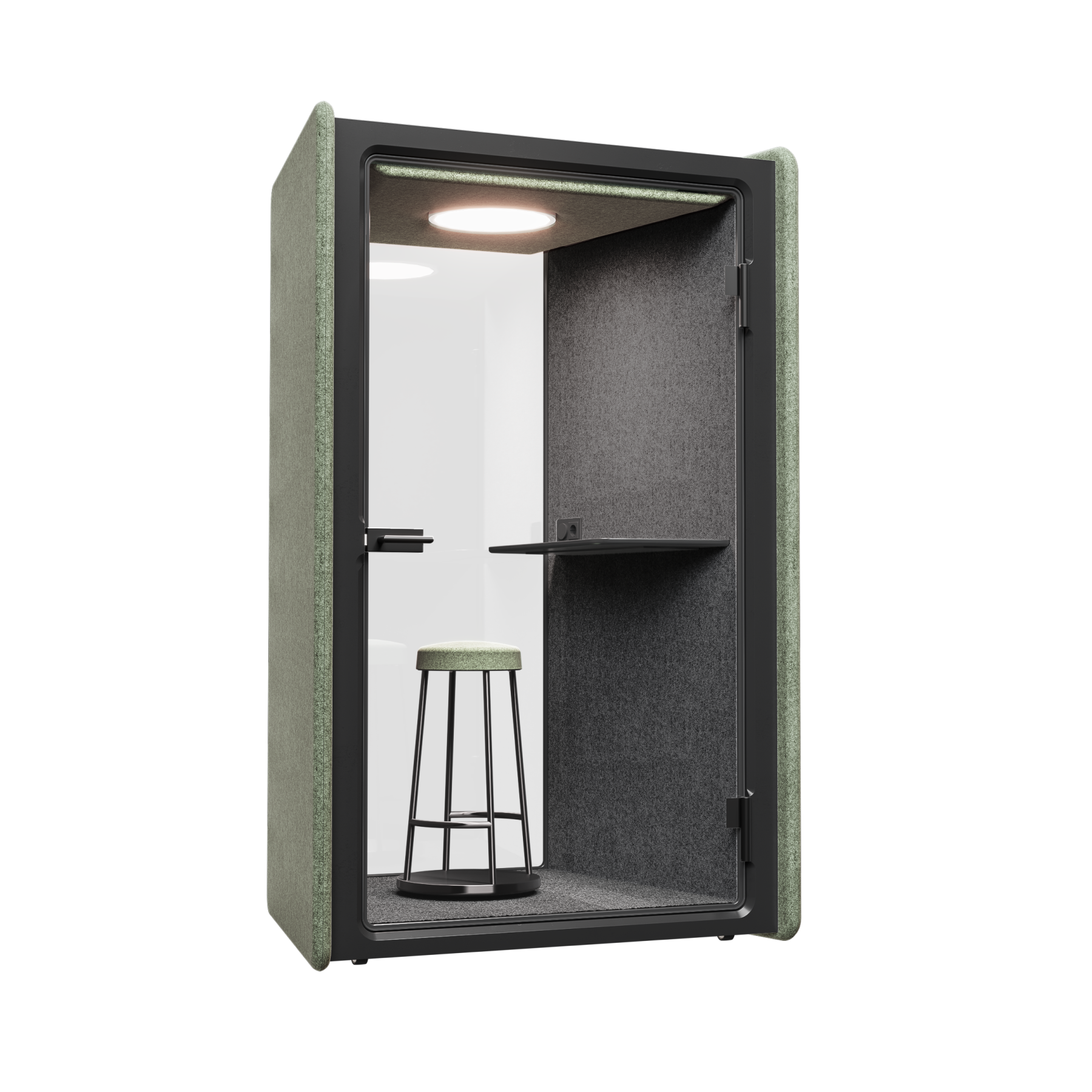
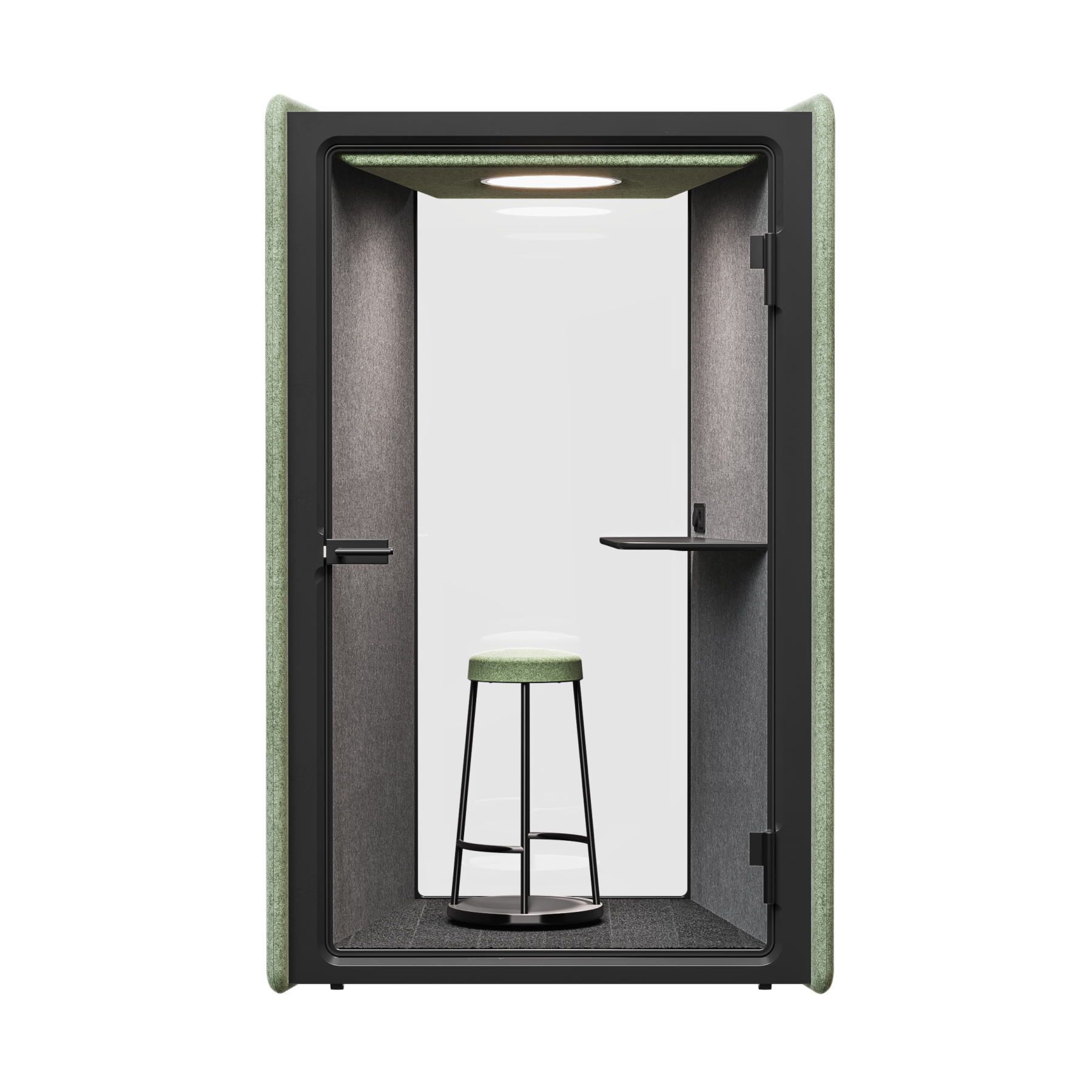
Booth keeps background noise under control
Booth is like a room within a room. It provides separation, while the glass walls ensure the user never feels cut off. Whether it is a confidential phone call or a loud video conference, no sound escapes beyond the walls.
- Class A sound insulation
- Spacious trapezoid-shaped interior
- Comfortable seat and an integrated table for a laptop or coffee cup
- Efficient ventilation keeps the air fresh even during longer use
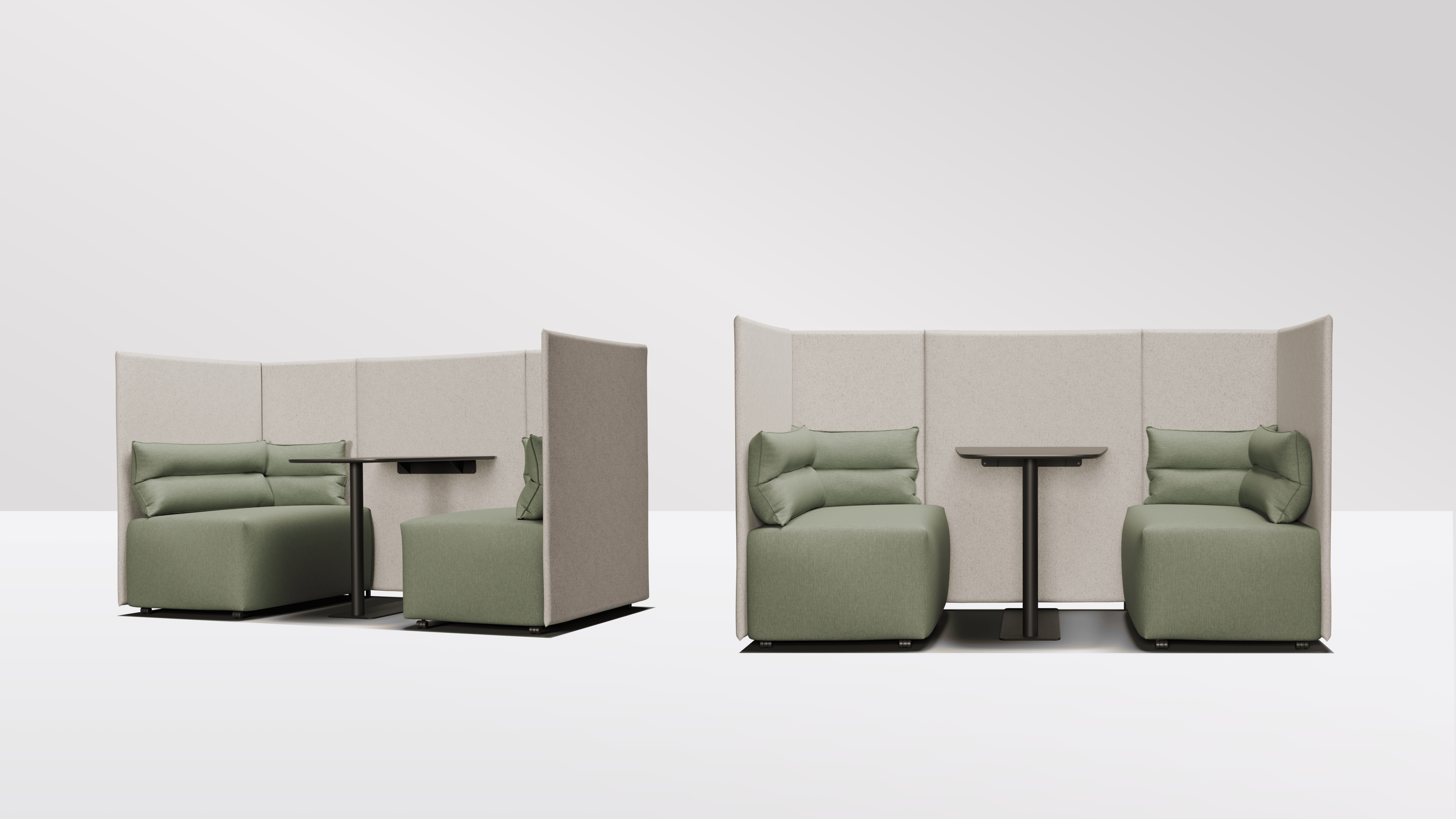
Wander – bringing home-like comfort to work
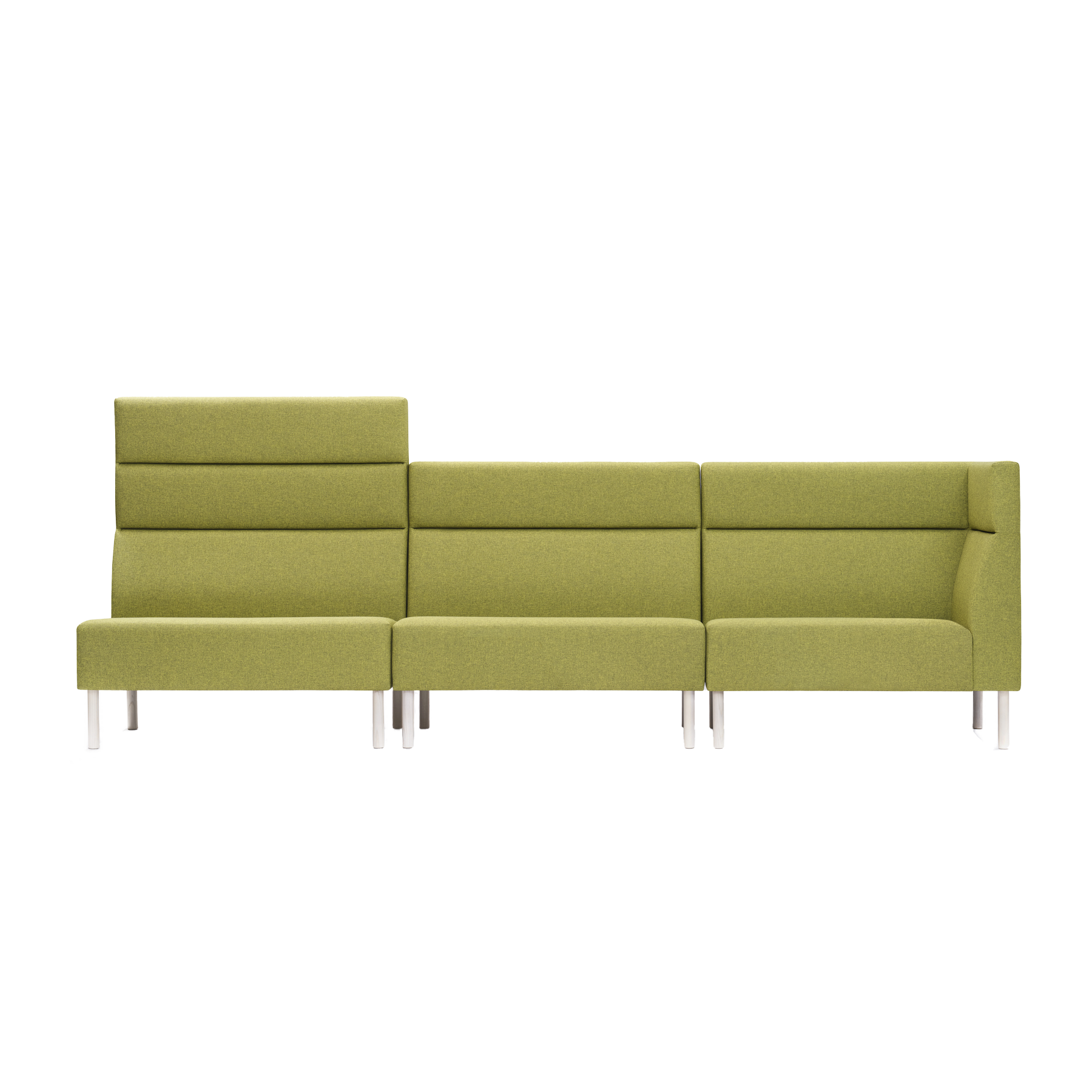
The niche sofa Wander combines homely comfort with the practicality of an office environment in a stylish way. High walls provide both visual and acoustic separation. Its modular design offers plenty of options for creating workstations for one or several users.
- Modules offer a wide range of layout possibilities.
- Equipped with a small table and power sockets, Wander becomes an ideal place to work.
- Soft back cushions can be adjusted to suit the sitter.
- A mobile version on castors is also available, if desired.

Hover – comfort and quiet in one
Even waiting while standing can be comfortable when there is something to lean on. The Hover wall panel is space-efficient and fits anywhere people may need to stand – from airport waiting areas to narrow corridors in offices or schools. Thanks to its acoustic foam and perforated core, Hover also offers effective sound absorption.
- Its modular design enables a variety of standing-wall configurations.
- Can be equipped with a practical small table and a power socket.
- A wide choice of upholstery fabrics allows it to bring character to any space.
- Designed in line with circular design principles.

August Nook – a desk that stands out
August Nook makes it possible to work in complete privacy. High walls keep distractions at bay. The seat remains comfortable even during long hours of focused work. Just like the rest of the August collection, Nook also improves room acoustics.
- A suitable work spot for office nomads and those who need to withdraw.
- High walls block out surrounding distractions.
- Equipped with a comfortable seat and practical worktop.
- Reduces background noise and improves room acoustics.
Making the workday an experience
Gensler’s 2025 survey involved nearly 17,000 respondents from 15 countries. Among other things, they were asked what their dream work environment would look like – and only 14% said it would resemble a traditional corporate-style office. This means that all the rest desire something different: environments offering greater flexibility and more varied experiences.
Striving towards a dream work environment is not merely a pleasant extra for employees – it’s the only viable path forward. Beyond helping to attract new talent, it also supports retaining them. A workplace that enables self-fulfilment, fosters meaningful relationships, and feels like somewhere people are genuinely happy to come to on a Monday morning – rather than feeling obliged to – nurtures loyalty and commitment. It’s a true win-win situation for both employees and employer.
More nature and comfort
Gensler asked respondents to describe their ideal work environment. Alongside the traditional office, they mentioned:
- proximity to nature – the opportunity to work outside (e.g., on a terrace or on an outdoor area), or indoors under similar conditions with plenty of natural light and fresh air;
- flexible and creative collaboration areas – spaces that can be reshaped as needed and are designed for teamwork;
- spaces that feel homely – where cosiness, comfort, and a relaxed atmosphere go hand in hand.
It is worth noting that preferences varied by sector, yet surprisingly, they remained largely consistent across age groups. Whether employees were mostly young, middle-aged, older, or represented several generations together, expectations were broadly aligned.
An office, yes – but what else?
The employer’s role in enhancing the workplace experience is to complement work and meeting rooms with additional areas where employees can enjoy different experiences. Which types of spaces did employees value most, according to the survey?
- Spaces for recovery and relaxation, where it is possible to clear the mind after focused effort.
- Areas for working together, as teamwork strengthens relationships and creates a sense of moving towards a shared goal.
- Food halls and dining areas, as these are spaces where colleagues can socialise. The more multifunctional an office café is, the easier it is to use it for informal gatherings too. Shared events are part of the work experience.
When employees were asked how much their opinions were considered during the office design process, only one-fifth felt involved. This is a clear opportunity for companies – and a chance to stand out positively.
Enhance the experience with Intuit

Grow – bringing greenery indoors
If the climate does not allow for outdoor areas, bring nature inside instead. The more plants in a room, the cleaner the air and the calmer the atmosphere. Employees appreciate this.
- A stylish partition that helps divide the room into zones.
- Wheels allow the layout to be changed as needed.
- Equipped with one or more plant boxes.
- Also available with shelves.

Don – modular seating with a homely feel
There is nothing cosier or more inviting than a soft, springy sofa. With its extra-wide seat, Don loosens up the atmosphere and brings a sense of homely ease to any break area. It is an excellent place to enjoy a coffee or chat with a colleague.
- Available in several different modules.
- Create a compact sofa or form long rows of seating.
- Ideal for informal areas.
- Gives visitors a homely, welcoming feel.
- Wide selection of upholstery fabrics.
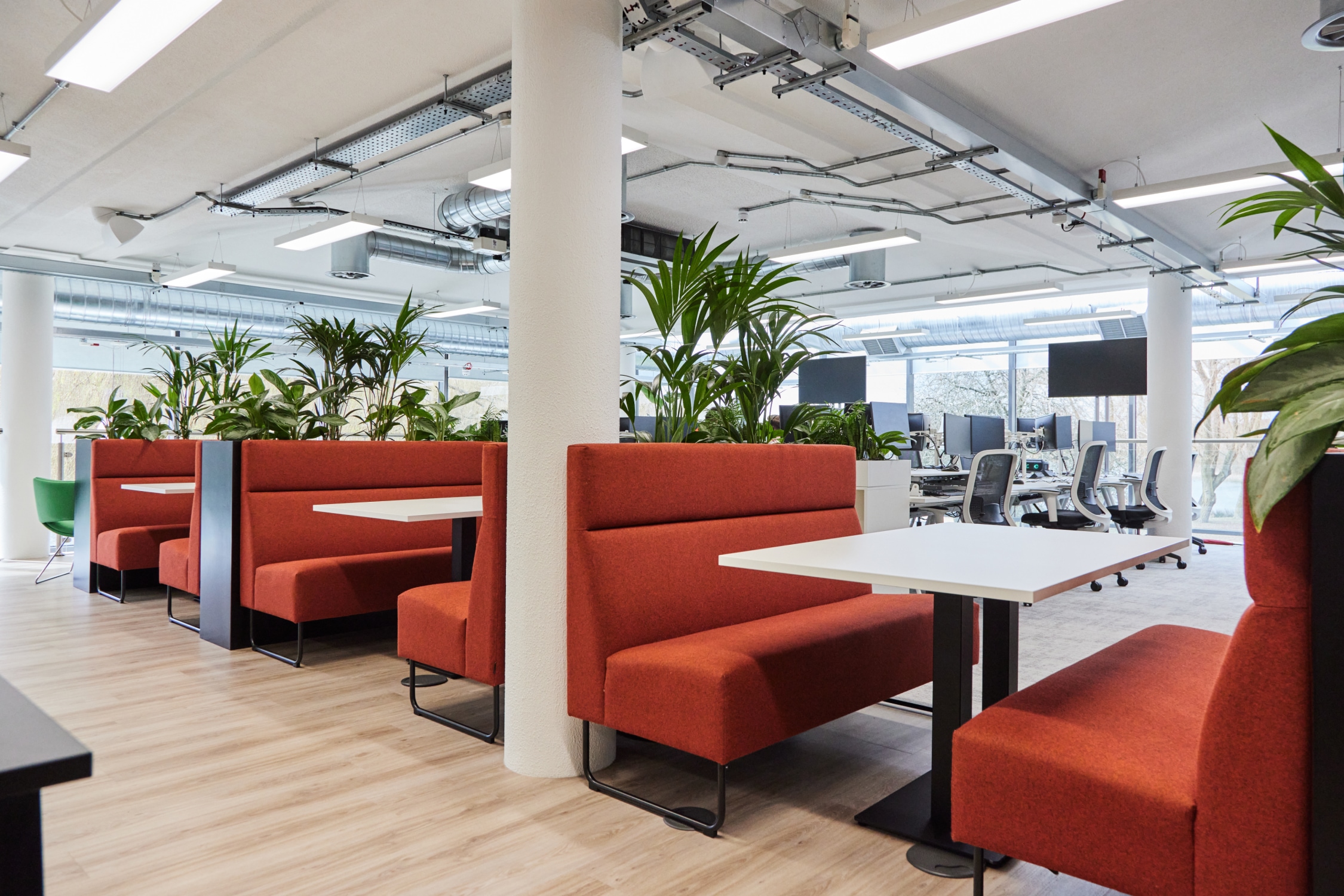
Meeter – flexible seating
Meeter offers a wide range of seating solutions for waiting rooms, halls, and dining areas. Functional and versatile, Meeter feels at home in any role – a refined café by day, a trendy lounge by evening.
- Includes sofas, armchairs, and sofa modules.
- Three backrest heights available.
- Compact seat cushion makes it easy to place anywhere.
- A popular choice for restaurants and dining areas.
- A comfortable seating position makes it suitable for use as a temporary workplace.

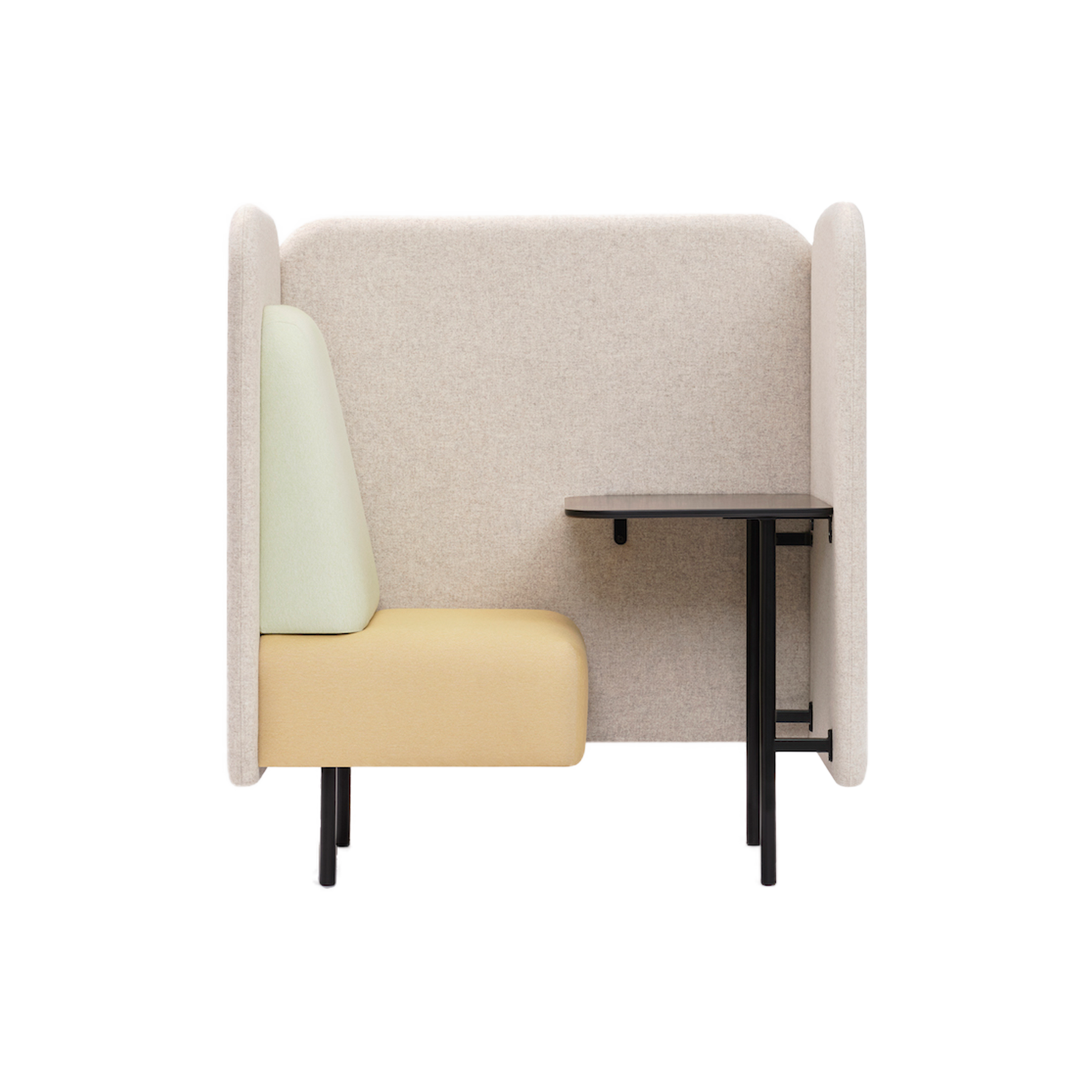
Frankie – a private relaxation corner
When the mind feels overloaded, it’s time to take a break. Frankie is a popular choice for offices where employees can nap in a quiet corner – or simply step away and focus in peace.
- Modular design allows for creating suitable cosy corners.
- High walls provide privacy and reduce noise.
- The side table is perfect for a coffee cup or laptop.
- Soft cushion supports the back or head.
- Ideal for moments of quiet work requiring concentration.
Human interaction: the workplace’s main attraction
The workplace survey also highlighted another interesting insight. Respondents were asked to list their reasons for coming to the office. While personal work tasks topped the list, four of the six main reasons were related to interaction with others.
This shows that teamwork and social connection are becoming increasingly important — and this needs to be taken into account when designing office spaces. To improve the efficiency of office work and ensure that the environment supports it, we must first understand why employees come to the office in the first place. The top six reasons were:
- 34%: to carry out their own work
- 32%: to participate in scheduled meetings
- 32%: to socialise with colleagues
- 30%: to use equipment available in the office
- 28%: to work with their team
- 26%: to meet with clients
Four out of the six reasons involve human interaction in one form or another. And although the word “meeting” has been familiar for decades, today it can mean very different formats — varying in formality, number of participants, and whether they are planned or spontaneous. The survey identified seven distinct types of meetings, all of which play an important role in building trust and moving towards shared goals.
What kinds of spaces are needed?
Employees were asked which spaces are best suited to different forms of teamwork. The responses showed that flexible team-working areas were seen as the most suitable for almost all types of collaborative work. Second place went to soft-seating areas furnished with sofas or armchairs. Only in third place was the classic meeting room. Stand-up meeting space for short meetings ranked last — understandably so, as this can be highly sector-specific (even though it is very common in companies with IT teams). As always, collaborative spaces must be created based on the organisation’s field of activity — preferences can differ.
Interesting fact: In Japan, the standard conference room was rated the highest, while flexible spaces dominated in most other countries. A traditional conference room is important everywhere, but it cannot support every form of teamwork. This is why a variety of spaces is essential.
Enhance collaboration with Intuit

Rolf – the mobile meeting table
The Rolf meeting table offers real flexibility, as its castors allow it to be moved exactly where the team needs to gather. With oak legs, it looks refined in any interior. Rolf is taller than the average meeting table, encouraging not only classic seated meetings but also effective stand-up sessions.
- Moves wherever needed thanks to its castors
- Stylish oak legs
- Fingerprint-resistant matte tabletop
- Also suitable for stand-up meetings

Flow – the flexible shared table
Flow is an eye-catching table designed for versatile use. It suits social spaces as well as kitchen areas — ideal for both meetings and shared lunch breaks. And if an office nomad — without a dedicated desk — drops by, Flow can accommodate them too.
- Stylish appearance thanks to its wooden trestle legs
- Optional power outlets and a felt cable holder
- Two-tone reversible tabletop

Meeter Workbay – for teamwork
The Meeter furniture collection is broad and versatile, but it is the Workbay modules that make it possible to create work islands where small teams can feel at ease. The high walls offer privacy, allowing several teams to work side by side without disturbing each other — ideal for schools, libraries, and shared office areas.
- Comfortable, enclosed seating for small teams
- Worktable adds functionality
- Can be equipped with power sockets
- Keeps background noise at bay
Ben – a cosy sofa for relaxed moments
A comfortable sofa is perfect for informal one-on-one conversations or for enjoying a coffee break. Ben brings homely warmth to any space, instantly making the environment more inviting.
- Elegant, maintains its shape well
- Wide seat cushion ensures homely comfort
- Suitable for welcome areas and social spaces
- Extensive selection of upholstery fabrics to enrich the interior
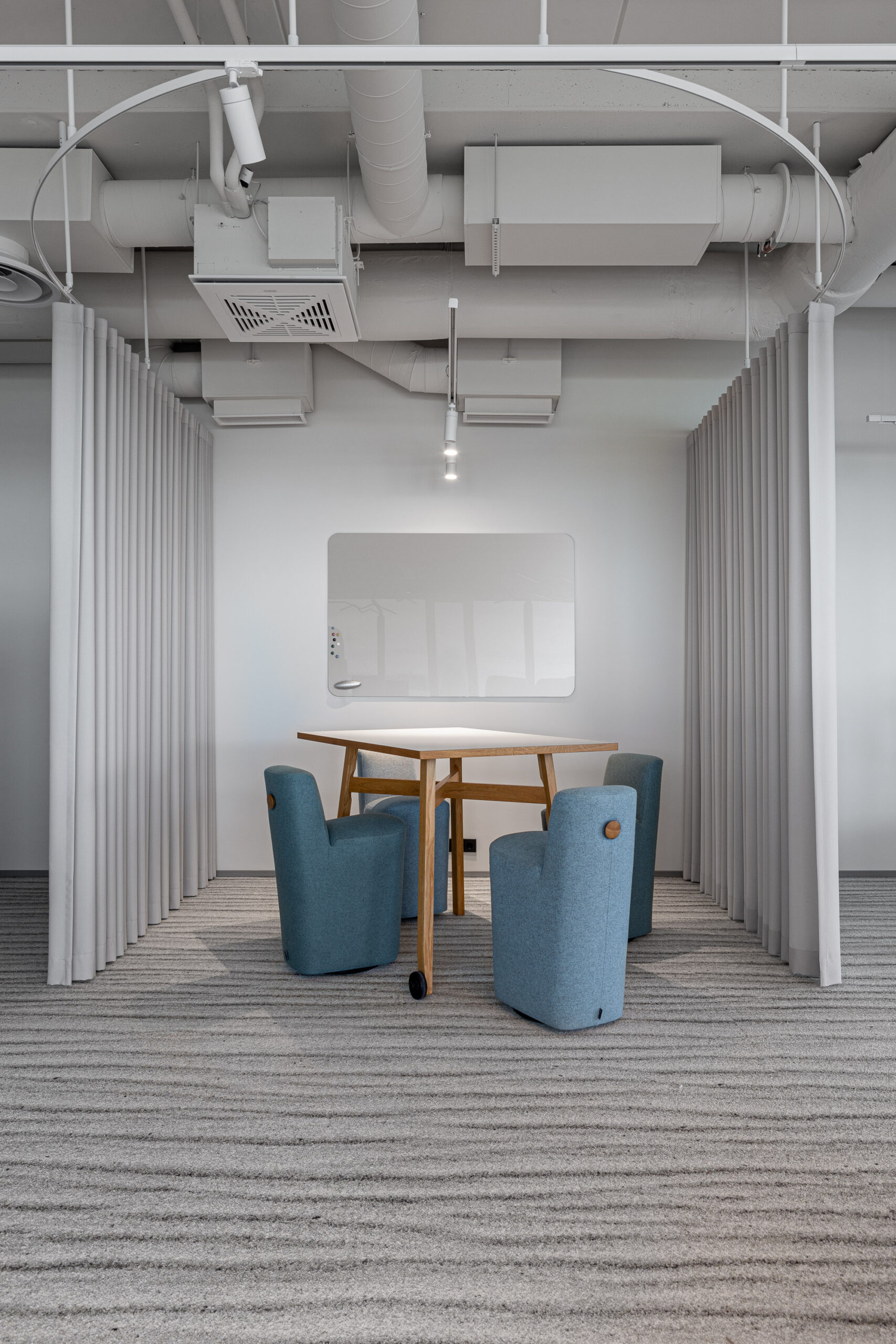
Hubert – high seating for high tables
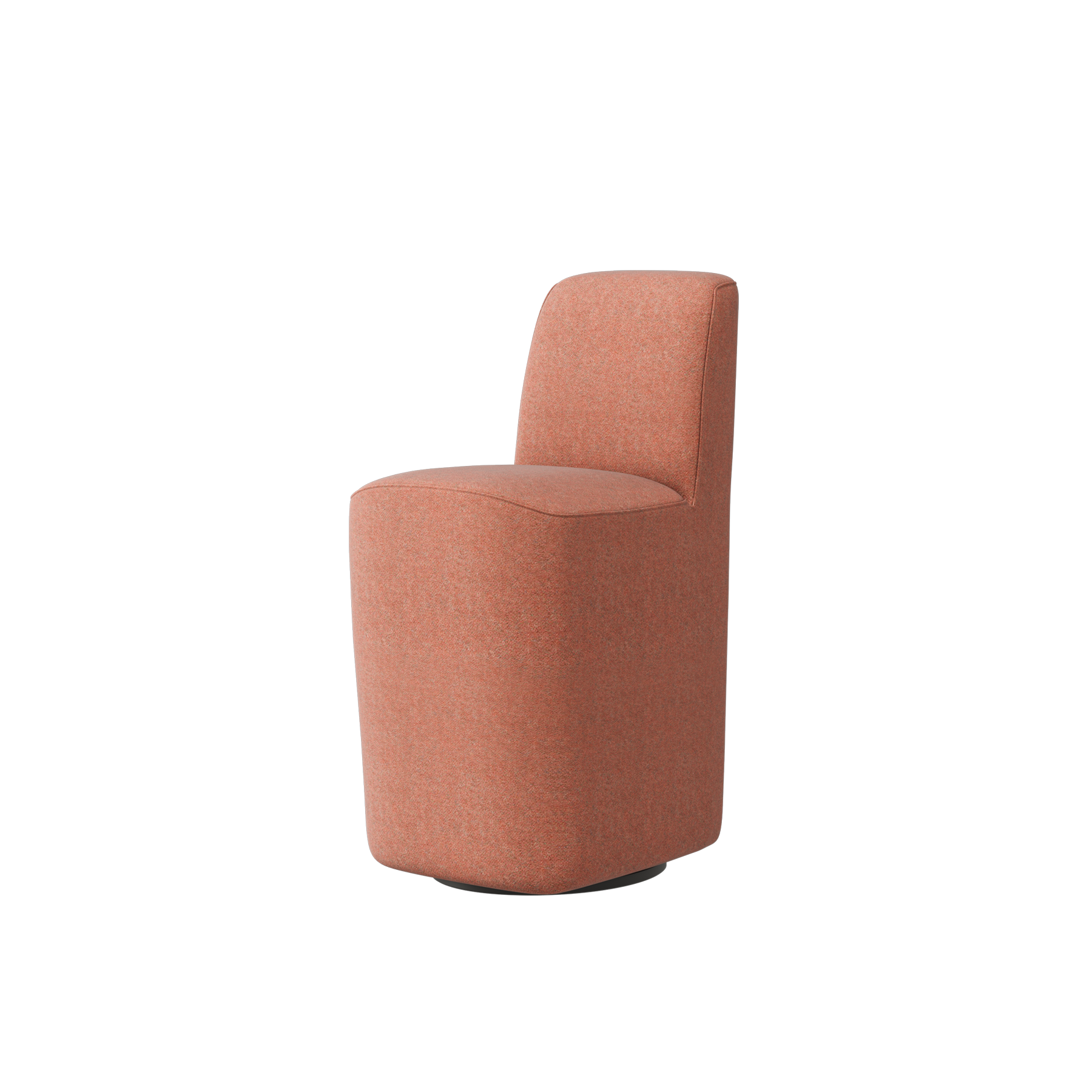
Hubert is a bar-height soft seat that stands out from classic meeting chairs thanks to its comfort. Its ergonomic sitting position is complemented by the ability to rock gently in any direction — helping the body stay active even during long discussions.
- Supports good posture while sitting
- Fully upholstered, adding a soft, inviting feel to the space
- Easy to move around
- Very wide choice of upholstery fabrics
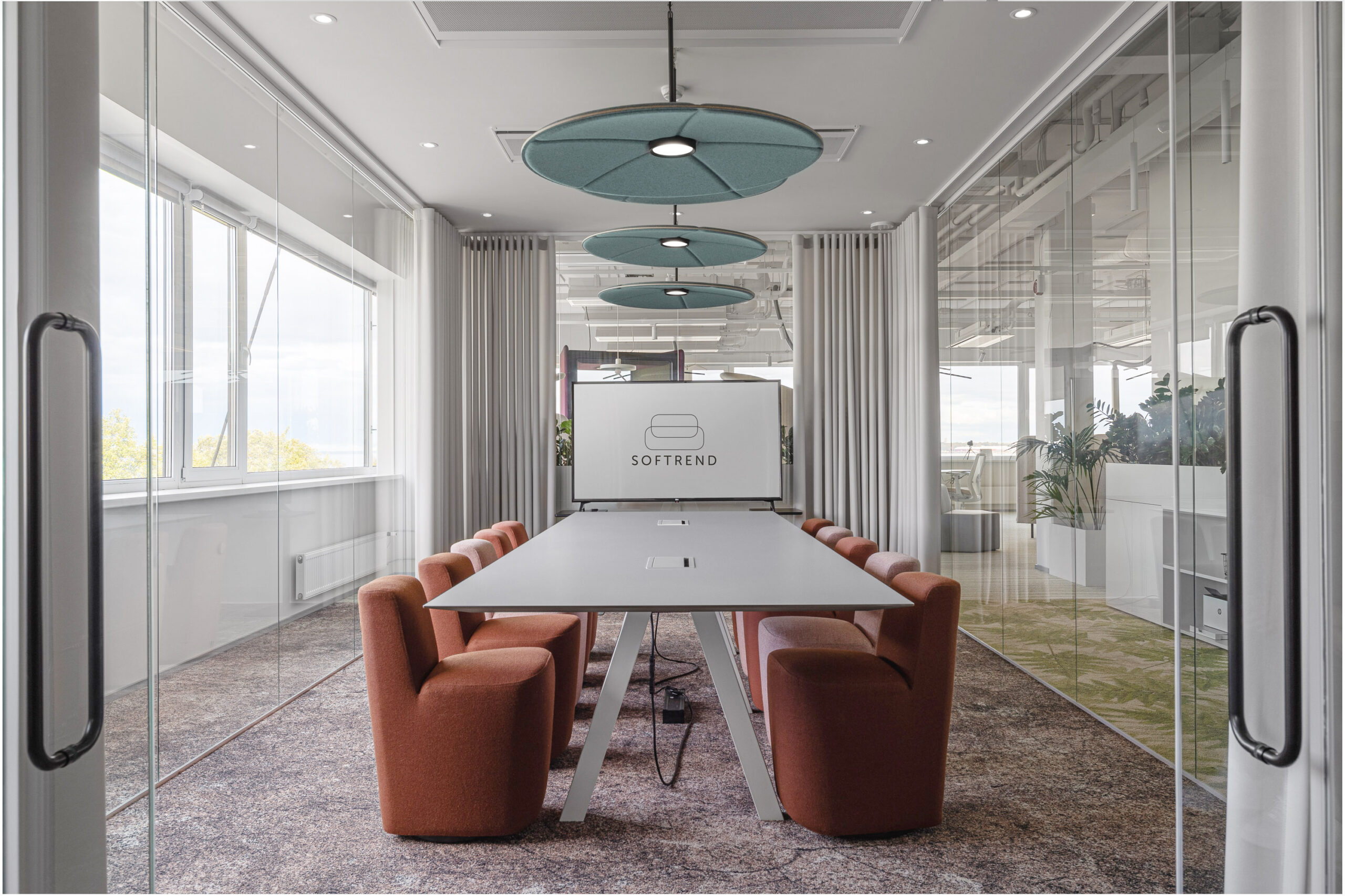
Hubert Mini – comfort in standard height
Hubert Mini has all the features of its “bigger brother” — just in a lower height, suitable for any standard meeting table. Fully upholstered, Hubert Mini is an excellent choice for those looking for a unique touch.
- Comfortable rocking sitting position
- Suitable for any standard meeting table
- Easy to move around
- Very wide choice of upholstery fabrics
Intuit brings beauty and function together
Functional design does not have to mean compromising on aesthetics. We are happy to help you create contemporary interior solutions that make work easier while also elevating the overall look of the space. For advice, write to us at or contact your nearest reseller.






Successful companies understand the importance of office design


